Brain & Mind Hub Sunshine Coast · For Psychiatrists
Pharmacogenomic Screening for difficult psychiatric prescribing decisions
Use pharmacogenomic testing when you need clearer guidance on dose,
tolerability, medication switching, or likely gene-drug issues in
complex psychopharmacology. Reports are built for specialist review
and returned in 2 to 3 weeks.
Best Fit
Failed trials, side-effect outliers, and medication switches
Clinical Output
Clinician-ready report with actionable phenotypes and drug-level
guidance
Evidence Base
CPIC, DPWG, FDA PGx, and BaMH synthesis in one report
Psychiatry is the deepest coverage area in the TBMH-PGx panel, with meaningful overlap into pain, neurology, and general medicine prescribing that often complicates specialist psychiatric treatment plans.
86+
medications represented
41
drug classes covered
46+
pharmacogenes referenced
4
clinical domains mapped
Psychiatry
The deepest coverage area in the panel, spanning antidepressants, antipsychotics, anxiolytics, stimulants, and mood stabilisers.
Common genes: Common drivers include CYP2D6, CYP3A4, CYP2B6, CYP2C9, ABCB1, and UGT2B7.
General Medicine
Smaller in scope, but relevant where psychiatric care intersects with sleep, cardiovascular, and behavioural prescribing.
Representative coverage: Melatonin, propranolol, and guanfacine.
Common genes: Coverage includes CYP1A2, CYP2C19, CYP2D6, and CYP3A4.
Highest-Volume Genes in the Current Guide
The quick-reference guide ranks these genes by the number of medications they influence within the panel.
CYP2D639 medications
Broadest influence across antidepressants, antipsychotics, stimulants, opioids, and tetrabenazine.
CYP3A427 medications
High relevance for antipsychotics, anxiolytics, ketamine/esketamine, donepezil, and several analgesics.
CYP2C1917 medications
Prominent in SSRIs, TCAs, diazepam, modafinil, and selected anticonvulsants.
CYP2C912 medications
Important for NSAIDs, phenytoin, phenobarbital, primidone, and valproate-related interpretation.
CYP1A28 medications
Frequently relevant for clozapine, olanzapine, duloxetine, melatonin, and propranolol.
CYP2B65 medications
Key for bupropion, methadone, tramadol, sertraline, and ketamine/esketamine metabolism.
Interpretation context: Use the examples below as a fast scope map for the current panel. They support referral triage, but the final report remains patient-specific and medication-specific. The panel is supported by CPIC, DPWG, and FDA-linked annotations where relevant.
Best Referral Fit
When Pharmacogenomics is most useful in psychiatric practice
The highest-yield referrals are the ones where you need the next
prescribing decision to be more defensible, not just more informed.
Multiple Unsuccessful Trials
Useful when antidepressants, antipsychotics, or ADHD agents have
produced limited benefit despite reasonable sequencing and
adherence.
Unexpected Side Effects
Helps explain adverse effects at standard doses, active-metabolite
burden, or the need for slower titration than expected.
Before the Next Switch
Particularly relevant when you are deciding whether to change
class, reduce dose, avoid a drug, or choose a more tolerable next
option.
Polypharmacy and Phenoconversion
Useful where interacting inhibitors or inducers may shift
functional phenotype and alter the interpretation of a usual
prescribing plan.
Complex ADHD and Mood Cases
Helpful where CYP2D6 or CYP2C19 findings may change the
risk-benefit balance across atomoxetine, antidepressants, and
adjunctive strategies.
Ketamine or Esketamine Planning
Supports broader panel selection and interaction review when
ketamine sits within a more complex medication pathway.
Key Enzymes
CYP2D6 and CYP2C19 in Precision Psychiatry
These two enzymes sit behind many of the prescribing problems
psychiatrists actually see in clinic: early side effects, partial
response, difficult dose finding, and surprising medication-switch
outcomes.
CYP2D6 is one of the body's most important drug-metabolising
enzymes. Found mainly in the liver, it helps process many commonly
prescribed psychiatric medications, including antidepressants,
antipsychotics, and ADHD medicines.
In precision psychiatry, CYP2D6 acts like a metabolic "speed controller." Genetic differences in CYP2D6 explain why one person gets side effects
at a low dose, why another seems to get little benefit, or why a medication
that is "standard" on paper turns out to be either ineffective or poorly
tolerated for a particular individual.
CYP2D6 also matters for non-psychiatric medications including codeine, tramadol, tamoxifen, and some cardiovascular
drugs, making it one of the most clinically relevant genes to test.
Clinical implications: CYP2D6 findings often support
dose reduction, slower titration, active-metabolite caution, or choosing
an alternative agent when tolerability has already been difficult.
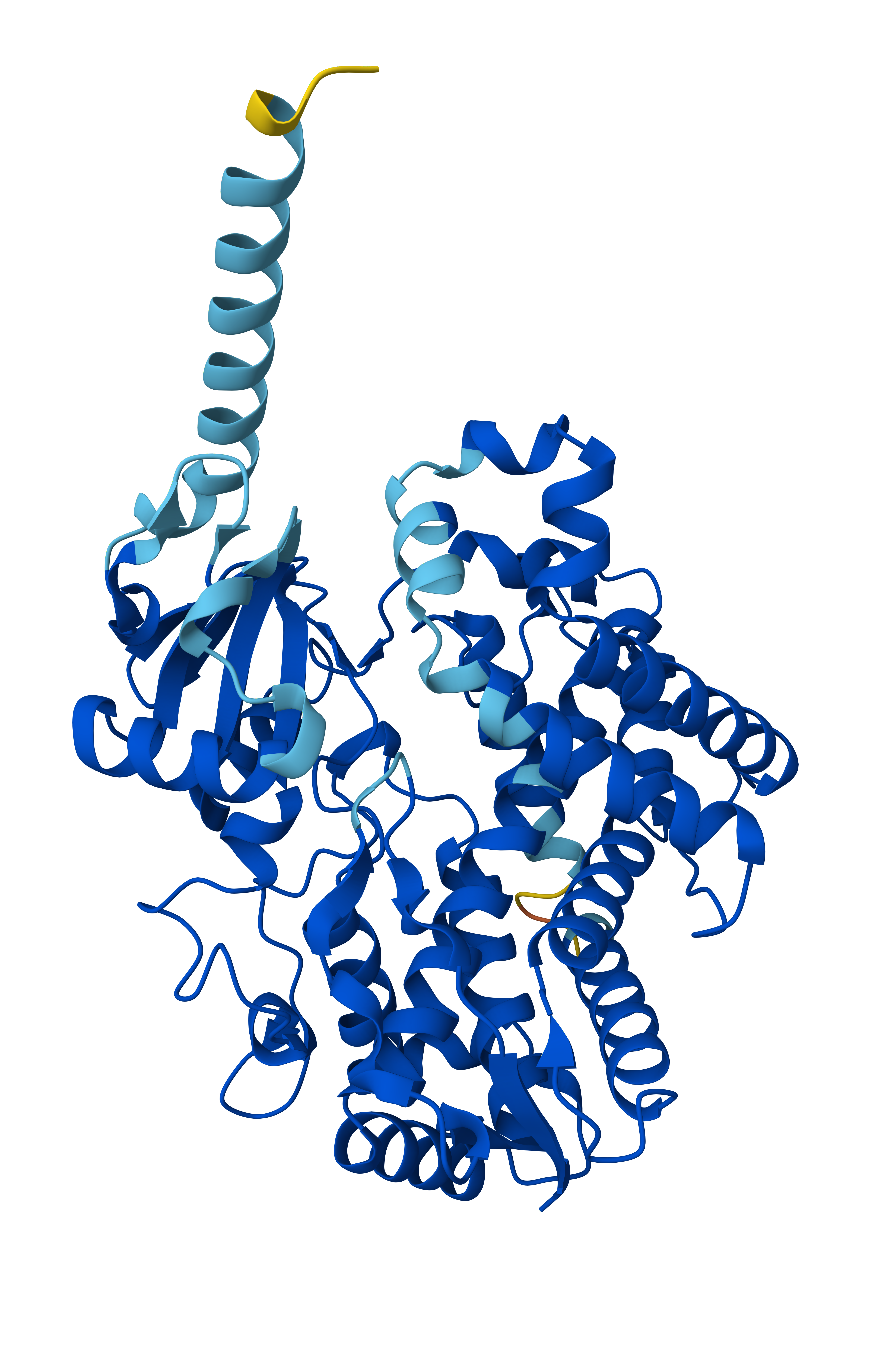
3D ribbon model of the CYP2D6 enzyme
CYP2C19
CYP2C19 is equally important in psychiatric prescribing. It
metabolises several first-line antidepressants including citalopram,
escitalopram, sertraline, and amitriptyline. CYP2C19 intermediate
metabolisers (a very common finding) may require slower titration
and lower maintenance doses for these SSRIs.
Prodrug interactions: For prodrugs activated by CYP2D6
(e.g., codeine → morphine), ultrarapid metabolisers face increased active metabolite levels, a safety concern, not a reduced-efficacy
concern.
Clinical implications: CYP2C19 results frequently affect
SSRI choice, starting dose, titration pace, and how much weight to give
an early tolerability problem versus a true lack of efficacy.
Report Utility
What comes back to you in the psychiatry PGx report
The report is built to shorten interpretation time in clinic. It is
not just a genotype dump.
Actionable Phenotypes
Clear metaboliser calls and activity interpretation for the genes
most likely to alter psychiatric prescribing.
Drug-Level Guidance
Medication cards highlight avoid, caution, moderate, or
use-as-directed pathways, with dose or alternative flags where
relevant.
Source-by-Source Context
CPIC, DPWG, FDA PGx, FDA label, and BaMH synthesis are shown
together so you can judge strength and differences quickly.
GGD Interaction Review
Flags multi-gene and drug-gene-drug issues that can change
phenotype in practice, especially in polypharmacy.
TDM and Monitoring Cues
Helps identify when plasma-level monitoring or closer early review
is worth building into the plan.
Built for Clinical Context
Designed to support the next prescribing decision alongside
comorbidity, adverse-effect history, organ function, and treatment
goals.
Evidence Base
Guideline Sources
TBMH-PGx reports draw from internationally recognised pharmacogenomic
sources so you can separate strong prescribing guidance from
background PGx context.
CPIC (Clinical Pharmacogenomics Implementation Consortium) provides evidence-based, peer-reviewed guidelines for gene–drug
pairs. CPIC uses a strong/moderate/optional/no recommendation framework
and is considered the gold standard for clinical PGx implementation.
CPIC guidelines undergo regular systematic evidence review and are
published in Clinical Pharmacology & Therapeutics.
DPWG (Dutch Pharmacogenomics Working Group) provides European guidelines for gene–drug interactions. DPWG and
CPIC often agree but may frame recommendations differently. DPWG guidelines
are embedded in Dutch clinical pharmacy infrastructure, providing
a complementary evidence source. The PGx report shows both, allowing
clinicians to compare evidence provenance.
FDA PGx labelling identifies
pharmacogenomic information mentioned in approved drug prescribing
information (US market). Not all FDA PGx entries carry the same level
of actionability as CPIC guidelines — the "Unspecified" label often
indicates informational content rather than a specific dosing recommendation.
Useful for regulatory context but should not be the primary driver
of prescribing changes.
When ketamine or esketamine is part of the treatment pathway, the
clinically relevant PGx landscape shifts beyond the usual SSRI and
antipsychotic focus.
Ketamine is primarily metabolised by CYP3A4 and CYP2B6, with CYP2C9 playing a secondary role. Genetic variation in
these enzymes may influence ketamine clearance, active metabolite
accumulation, and both therapeutic response and dissociative
side-effect burden.
Where it can be useful:
CYP3A4/5 variants — may help explain altered duration
of effect, clearance, or atypical tolerability CYP2B6 variants — may shift norketamine formation
and metabolite profile interpretation Drug–drug interactions — important when inducers
or inhibitors sit around the ketamine plan OPRM1 — emerging relevance to ketamine's analgesic
and antidepressant effects
Evidence note: PGx guidance for ketamine is still
emerging. Unlike CYP2D6/CYP2C19 where robust CPIC guidelines exist,
ketamine PGx should be applied as a complementary consideration. Clinical
judgement remains paramount.
How does this differ from standard PGx?
Most psychiatric PGx centres on CYP2D6 and CYP2C19. Ketamine
planning shifts attention to CYP3A4/5 and CYP2B6, especially
when the patient is already on a complex regimen.
Recommendation: If ketamine or esketamine is likely to remain part of the pathway,
the Comprehensive Panel is the more clinically useful option.
Use the form below to start the patient workflow. The patient receives purchase and kit instructions directly, while the completed report comes back to you for specialist review.
Fast to Refer
The referral only needs the clinical essentials required to start
patient contact and route the final report back to you.
Patient Workflow Handled
After referral, the patient receives clear steps for purchase,
home swab collection, and return shipping.
Report Returns to You
The PGx result is designed for psychiatrist interpretation in the
context of current medications, adverse effects, and treatment
goals.
1
Clinician Details
2
Patient Details
3
Review & Send
Clinician
Details
Patient
Details
Review & Send Referral
Please review the details below. When you click "Submit Referral", the referral will be encrypted and sent to TBMH's private
intake workflow.
Patient payment email
—
Referrer notification
—
PGx Consultant
Dr. Phoebe Slape
pgx@tbmh.org.au
Referral Submitted
TBMH's private intake workflow will validate the referral and send
payment instructions to:
pgx@tbmh.org.au
Success
Report Guide
Interpreting Your PGx Report in Clinic
Use the report in this order when you need to interpret it quickly in
specialist practice: Dashboard, Medications, Genotypes, GGD
Interactions, TDM, then the source notes on each drug card.
1
Scan the Dashboard First
Start with Key Findings plus the Preferred and Avoid panels. This
gives you the actionable genotypes, priority drugs, and
phenoconversion risks in under a minute.
2
Check the Intended Prescription
Search the Medications tab for the proposed drug or class. Start
with the report risk level: Significant, Moderate, Caution, or Use
as Directed.
3
Read the Drug Card in Order
Interpret the risk tag, impacted genes, phenotype chips, and any
DOSE or ALT markers before opening the full clinical note and
source-by-source recommendations.
4
Resolve Source Differences
Compare CPIC, DPWG, FDA PGx, FDA Label, and the BaMH synthesis.
When sources diverge, use the indication and patient context to
decide whether to titrate, monitor, or switch.
5
Check GGD and TDM Tabs
Open GGD Interactions for phenoconversion and multi-gene effects,
then use the TDM tab where flagged to plan plasma level monitoring
after initiation or dose change.
6
Close With Clinical Context
PGx is prescribing decision support, not a prescription. Reconcile
the report with current medicines, comorbidities, renal or hepatic
function, adverse effect history, and treatment goals before
acting.
What the report is showing you
The clinician guide describes six core report areas - Dashboard,
Medications, Genotypes, GGD Interactions, TDM, and How to Read.
Drug-level risk tags tell you how actionable the prescribing issue
is, while phenotype labels, activity scores, and gene-specific notes
explain why that recommendation appears.
Quick Reference
Key Terms
Use this as a refresher for report language and phenotype terminology.
Most psychiatrists will only need it for occasional reference.
Activity Score
Numeric value quantifying expected enzyme activity (e.g. CYP2D6 AS
1.0 = Normal Metaboliser).
Star Allele
Naming system for gene variants, e.g. CYP2D6*1 (normal function)
or *4 (no function).
Phenotype
Predicted functional effect: Poor, Intermediate, Normal, Rapid, or
Ultrarapid Metaboliser.
Genotype
Your specific diplotype result for a gene, e.g. *1/*4 (one
functional + one non-functional allele).
Prodrug
A medication converted to its active form by a metabolising
enzyme; ultrarapid metabolisers may overproduce active metabolite.
SNP
Single Nucleotide Polymorphism — the smallest type of genetic
variation, and the most common type tested in PGx.
Actionable Result
A genetic finding that may guide a clinical decision — dose
adjustment, alternative medication, or enhanced monitoring.
Diplotype
The combination of two alleles (one from each parent) that
determines your overall enzyme function for a given gene.
Gene–Drug Pair
A specific gene-medication combination for which clinical
pharmacogenomic guidelines exist (e.g. CYP2D6–aripiprazole).